TransportationRobustie SolutionsSMP PlayersSMP-2200Thailand
Staying the Course
Red Line's Fleet Upgrade Built on Trust in CAYIN Technology
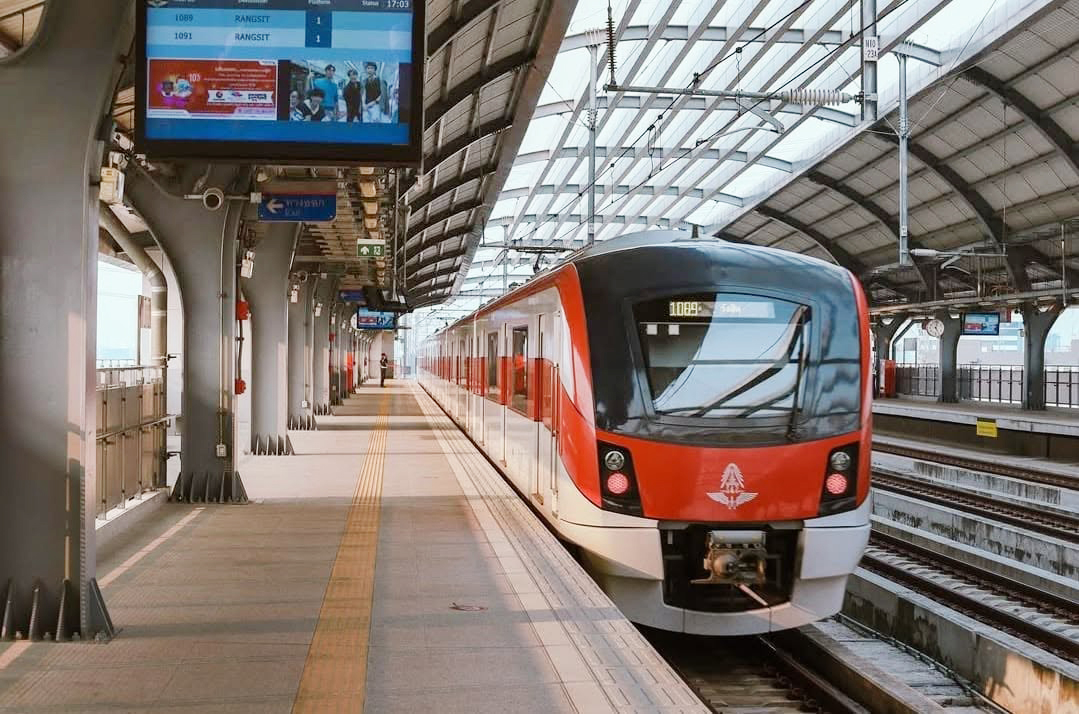

A Red Line train arrives at the station as the digital signage screen displays the live schedule to Rangsit.
Red Line digital signage is a transportation information system that runs on CAYIN SMP-2200 industrial players. Deployed across Red Line stations in Bangkok, Thailand, it delivers live train names, estimated arrival times, and a real time countdown for waiting passengers.
A Platform the Team Already Knew
The Red Line commuter train, operated by the State Railway of Thailand (SRT), connects Bangkok's suburbs to the city center, running at a scale comparable to the BTS and MRT systems, with higher passenger volumes and a slightly faster pace.
For several years, station screens along the Red Line ran on CAYIN SMP-2100 players, quietly doing their job, showing train names and estimated arrival times to commuters waiting on the platform. It was not a flashy system, but it worked, and SRT's own team knew it inside out.
Day after day, station staff relied on the same dashboard to push updates across the network, and commuters grew used to glancing at the same familiar screen layout while they waited. That consistency mattered as much as the technology itself, because a transportation network is judged less by what is new and more by whether it is dependable every single day.
Aging Hardware on a Live Network
Every fleet of hardware eventually reaches the end of its service life, and a transportation network cannot afford downtime while that happens. SRT needed to replace its aging SMP-2100 units across every station without disrupting the live information screens commuters rely on daily.
The bigger question was not which vendor to choose. SRT already trusted the platform. The real question was how to execute a fleet wide swap of all 40 players across the network without creating gaps in the live information commuters depend on every day.
Even a short gap in coverage at a handful of units could ripple into confused commuters and extra calls to station staff. SRT wanted a replacement plan that could move in phases, station by station, while keeping the rest of the network running exactly as before.
The bigger question was not which vendor to choose. SRT already trusted the platform. The real question was how to execute a fleet wide swap of all 40 players across the network without creating gaps in the live information commuters depend on every day.
Even a short gap in coverage at a handful of units could ripple into confused commuters and extra calls to station staff. SRT wanted a replacement plan that could move in phases, station by station, while keeping the rest of the network running exactly as before.
A Straightforward Swap to SMP-2200
The project came together through CAYIN's regional partner DmaSStech, who connected SRT with the CAYIN team for this upgrade. From there, SRT replaced all 40 units with the CAYIN SMP-2200, deployed behind the train service display screens at stations across the network. Installation itself was carried out entirely by SRT's own staff, with no external installer or system integrator needed, managing every player through centralized control.
Because the team had already spent years running SMP-2100 units day to day, moving to SMP-2200 meant applying familiar workflows to newer hardware. There was no learning curve to climb before the network could go live again.
Each unit was swapped in and brought online individually, with the central dashboard confirming connection status before staff moved on to the next station. That station by station approach let SRT keep the rest of the network fully operational throughout the transition, rather than taking multiple locations offline at once.
Because the team had already spent years running SMP-2100 units day to day, moving to SMP-2200 meant applying familiar workflows to newer hardware. There was no learning curve to climb before the network could go live again.
Each unit was swapped in and brought online individually, with the central dashboard confirming connection status before staff moved on to the next station. That station by station approach let SRT keep the rest of the network fully operational throughout the transition, rather than taking multiple locations offline at once.
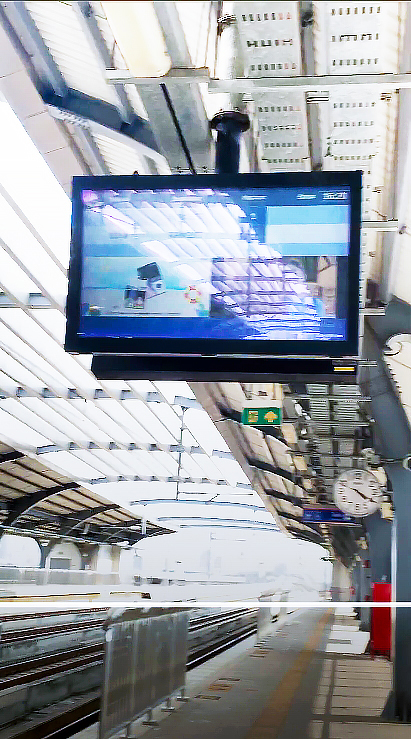
A CAYIN SMP-2200 powered screen mounted at a Red Line station, running alongside the station clock.
A New Request for a Real-Time Countdown
Beyond the straight replacement, SRT asked CAYIN for a custom screen template with one addition, a real time countdown showing passengers the number of minutes left until the next train.
It is a small change on screen, but it turns a static arrival time into something commuters can watch tick down as they wait, a detail that reflects how SRT keeps refining the passenger experience on top of a platform it already trusts.
Requests like this are easier to act on when a customer already knows the platform well. Because SRT's team understood how CAYIN's content scheduling worked, defining exactly what the new template needed to show made the turnaround faster than starting the conversation from scratch.
It is a small change on screen, but it turns a static arrival time into something commuters can watch tick down as they wait, a detail that reflects how SRT keeps refining the passenger experience on top of a platform it already trusts.
Requests like this are easier to act on when a customer already knows the platform well. Because SRT's team understood how CAYIN's content scheduling worked, defining exactly what the new template needed to show made the turnaround faster than starting the conversation from scratch.
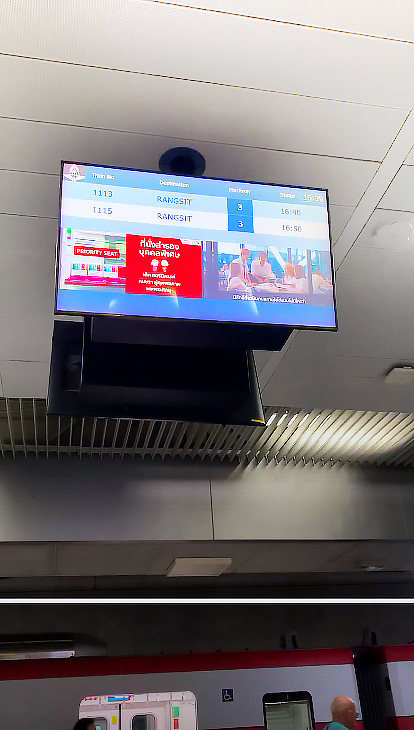
A close-up of the station screen showing live train schedules to Rangsit for passengers waiting on the platform.
A Clean Transition, With More to Come
The project was completed on May 7, 2025, and the rollout went smoothly from installation through go live.
SRT has expressed satisfaction with the result and is already planning to purchase additional SMP-2200 units for future expansion.
For a public network that runs every day without pause, a transition with no reported disruption is itself a meaningful outcome. It confirms that the fastest way to modernize a signage fleet is often to build on a platform the team already trusts, rather than starting over with something new.
SRT has expressed satisfaction with the result and is already planning to purchase additional SMP-2200 units for future expansion.
For a public network that runs every day without pause, a transition with no reported disruption is itself a meaningful outcome. It confirms that the fastest way to modernize a signage fleet is often to build on a platform the team already trusts, rather than starting over with something new.
What This Project Shows
Not every upgrade needs to start from a blank page. When a trusted product platform is paired with a partner who already knows how to deploy it, a fleet wide swap can move quickly and cleanly, even across a live network of this scale.
DmaSStech's work with CAYIN on other Thailand deployments carried directly into this project, and SRT's own familiarity with the platform meant the transition required no relearning on the operations side.
For transportation operators weighing a similar upgrade, Red Line's experience points to a simple takeaway. Pairing a trusted platform with an experienced local partner is often the fastest and safest way to modernize a live public network.
DmaSStech's work with CAYIN on other Thailand deployments carried directly into this project, and SRT's own familiarity with the platform meant the transition required no relearning on the operations side.
For transportation operators weighing a similar upgrade, Red Line's experience points to a simple takeaway. Pairing a trusted platform with an experienced local partner is often the fastest and safest way to modernize a live public network.
Case Snapshot
What problem did Red Line need to solve?
The CAYIN SMP-2100 players running Red Line's station screens for years were reaching end of service life. SRT needed to replace all 40 units across the network without disrupting the live arrival information commuters rely on.
What digital signage hardware did Red Line deploy?
SRT replaced all 40 units with CAYIN SMP-2200 industrial-grade digital signage players, installed behind the train service display screens at stations across the network.
Who carried out the installation?
DmaSStech, CAYIN's regional partner, connected SRT with the CAYIN team for this project. Installation itself was carried out entirely by SRT's own staff, with no external installer or system integrator needed.
What new feature came out of this project?
SRT requested a custom screen template with a real time countdown, showing passengers the number of minutes remaining until the next train arrives.
When was the project completed, and what came next?
The replacement was completed on May 7, 2025. SRT reported a smooth transition and is already planning to purchase additional SMP-2200 units for future expansion.
Media Contact
CAYIN Technology Co., Ltd.
Tel: +886-2-2595-1005
Fax: +886-2-2595-1050
Email: press@cayintech.com
Address: 3F., No. 57, Sec. 3, Zhongshan N. Rd., Zhongshan Dist., Taipei City 104, Taiwan
Fax: +886-2-2595-1050
Email: press@cayintech.com
Address: 3F., No. 57, Sec. 3, Zhongshan N. Rd., Zhongshan Dist., Taipei City 104, Taiwan
Share


