HealthcareRobustie SolutionsSMP PlayersSMP-2200Taiwan
A Legacy Clinic, Reimagined
JB Clinic × CAYIN Technology:
Smarter Waiting, Better Care
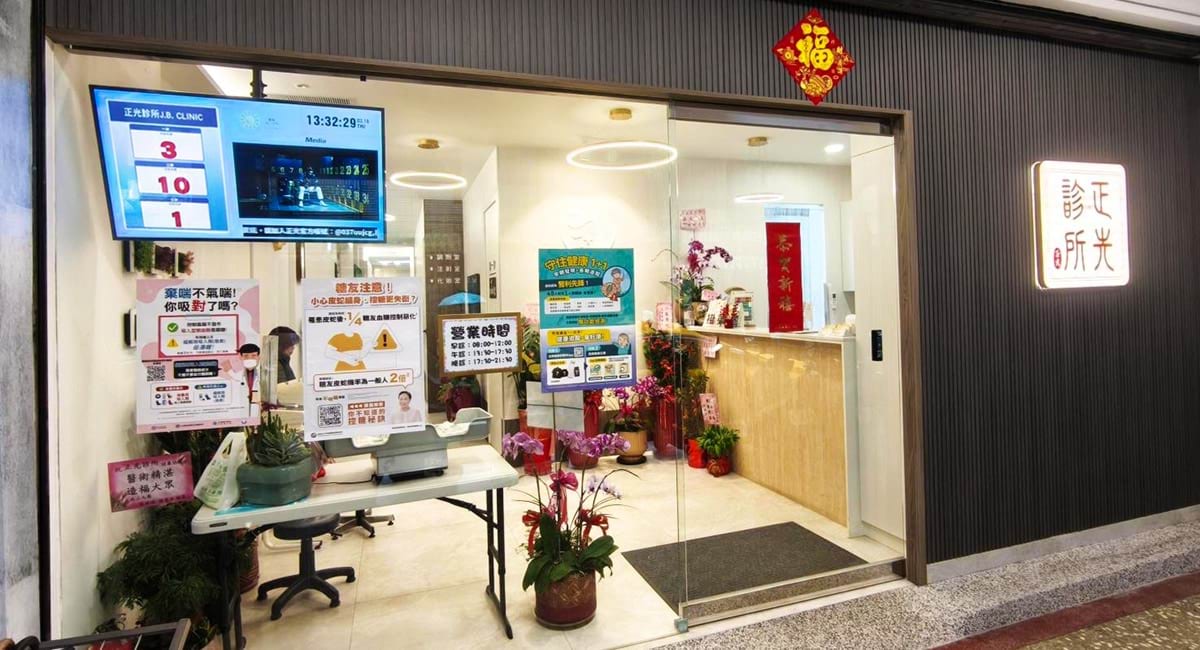

JB Clinic digital signage is a healthcare queue and waiting-room system that pairs CAYIN SMP-2200 industrial players with integrated queue management. Deployed in Keelung, Taiwan in January 2026, it delivers dynamic dual-room layouts, low-latency call updates, and on-screen health education for patients and staff.
Where It All Began: One Clinic, Four Decades of Commitment
Tucked in a quiet alley beside the Nanxing Market in Keelung's Qidu District, JB Clinic doesn't look like much from the outside. There's no grand lobby, no towering signage. But its lights have never gone dark — not in over 40 years.
JB Clinic is more than a place to see a doctor. It was the first clinic in Keelung to establish a smoking cessation program, and it has long extended its reach into underserved communities through volunteer medical outreach. Pulmonary function tests, retinal screenings — services you wouldn't expect from a neighborhood clinic are simply part of the routine here.
Over the decades, JB Clinic has become something rare: a clinic people genuinely trust.
But trust is a foundation, not a finish line. As patient volume grew, small friction points began to surface. Patients didn't know how far down the queue they were. Announcements were hard to hear. People waiting outside had no way to track their progress. None of it was catastrophic — but it quietly eroded the experience that decades of care had built.
💡 Insight: The waiting room experience often shapes a patient's lasting impression of a clinic — more than the consultation itself.
The clinic's physicians understood this. So they made a decision: use technology to honor the same commitment they'd kept for 40 years.
The Real Challenge: More Than Just 'Installing a Screen'
Digital transformation sounds straightforward — until you're actually doing it in a community clinic. JB Clinic faced a set of challenges familiar to small and mid-sized medical practices everywhere:
To meet these needs, JB Clinic assembled a three-partner team — each bringing a distinct and essential expertise.
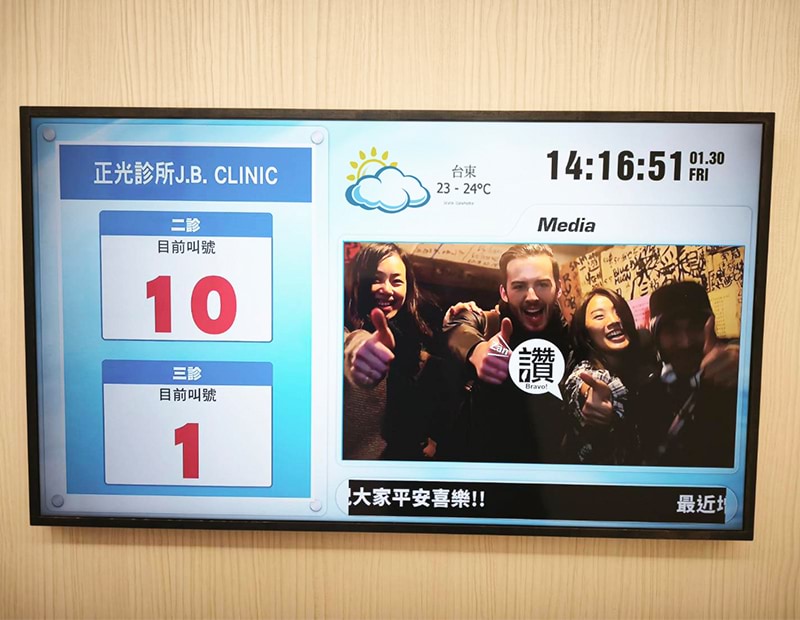
- Shared display, two consultation rooms: Rooms 2 and 3 are adjacent and share a single screen. How do you show accurate queue information for both without confusing patients?
- Non-technical staff: Clinic staff are healthcare professionals, not IT engineers. Any system had to be manageable without technical training.
- Zero tolerance for downtime: A crash or lag in a busy waiting room creates chaos and damages trust immediately.
Three Experts, One Seamless System
What made this project work wasn't any single piece of technology. It was the precision of three specialists working in concert — not selling products, but solving problems.
- CAYIN Technology — The Core Engine
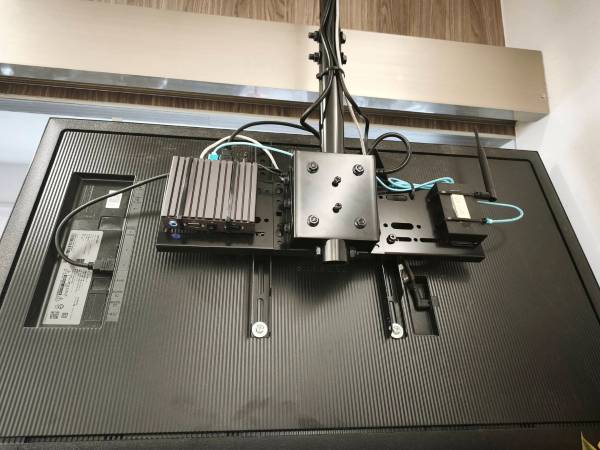
CAYIN provided three SMP-2200 industrial-grade digital signage players as the hardware backbone of the system. CAYIN's reputation for stability isn't marketing language — it's the result of years of deployment in high-stakes environments: hospitals, retail chains, government offices.
Equally important is the management interface. Designed around intuitive visual controls, it allows clinic staff to adjust content on the fly whenever schedules change — no IT support required. - Pao-An Technology — The Needs Translator
Pao-An Technology played the most critical — and most overlooked — role in the project: systems integrator.
Rather than applying an off-the-shelf configuration, their team visited the clinic in person, sat down with the physicians, and translated real-world clinical workflows into executable technical specifications. Knowing that JB Clinic's schedule shifts frequently, Pao-An Technology designed multiple pre-configured 'scene switching' scenarios — allowing the system to adapt automatically or manually to any combination of active consultation rooms. This is what made the system feel alive. - PilotTV Media — The Queue System Architect
PilotTV Media handled the development and integration of the core queue management system. By deeply connecting it with CAYIN's players, the system supports both one-to-one and many-to-one display configurations — meaning no matter how the clinic reconfigures its rooms, queue information always appears on exactly the right screen, exactly when it should.
Inside the Solution: How SMP-2200 Solves Real Clinical Problems
The technical details here are worth understanding —
because what was solved at JB Clinic is a problem dozens of clinics deal with every single day.
because what was solved at JB Clinic is a problem dozens of clinics deal with every single day.
Dynamic Room Mapping | Smart Layouts, No Manual Switching
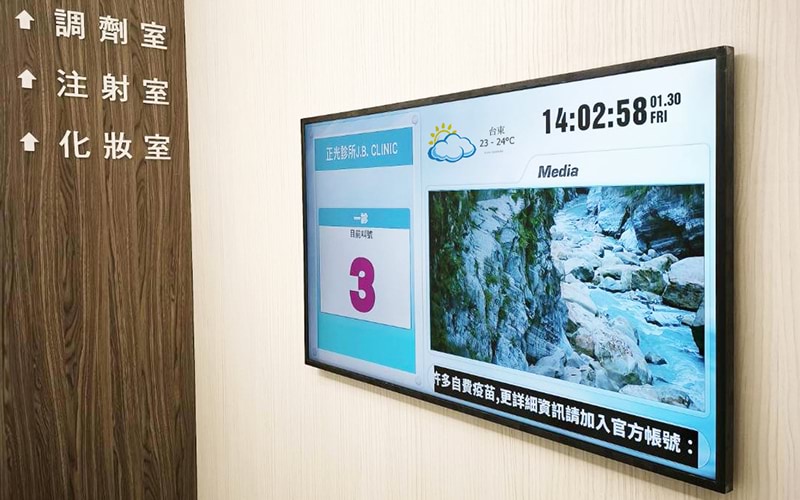
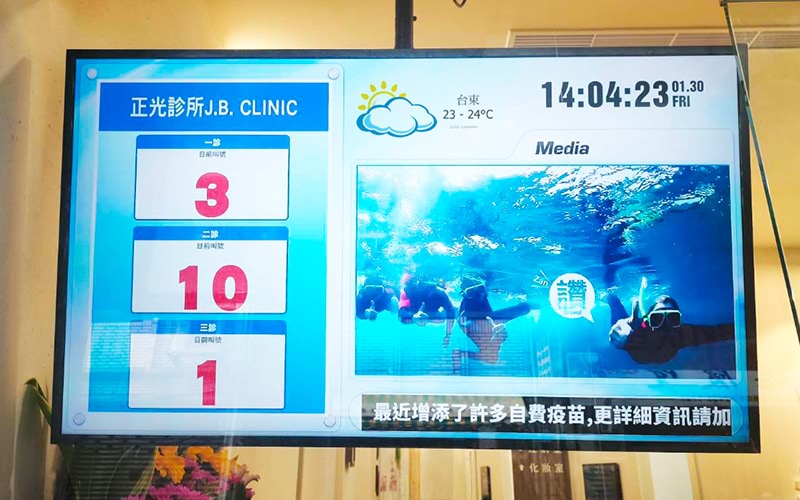
Sharing one screen between two consultation rooms sounds like a compromise. CAYIN's system turns it into an advantage. The display automatically adjusts based on which rooms are active:
Low-Latency Wireless Transmission | Called Now, Shown Now
The most damaging flaw in any queue system is lag. When the system calls number 58 but the screen still shows 55, the waiting room starts to stir.
SMP-2200 uses low-latency wireless transmission to keep screen updates and audio announcements nearly synchronized. Patients seated anywhere in the clinic — or waiting just outside — always see the current status.
Integrated Health Education | Turning Wait Time into Value
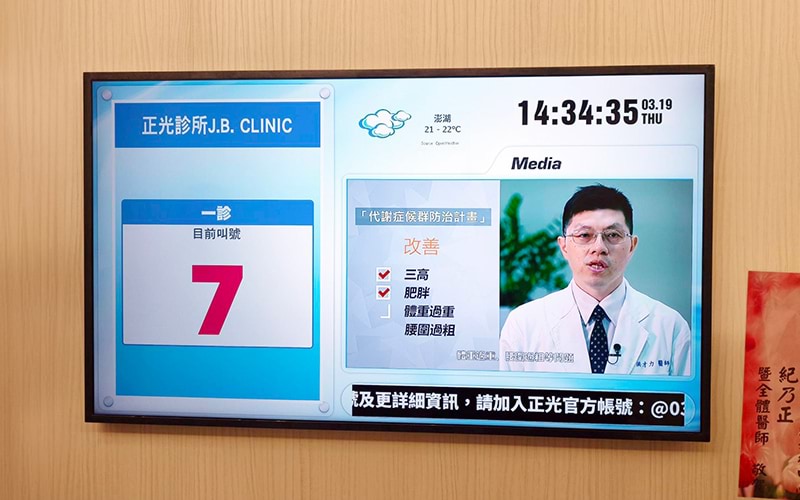
The screens don't just show numbers. The system simultaneously broadcasts:
The waiting room is one of the few moments patients sit still. Video-format health content reaches them far more effectively than posters on the wall — and it does so without interrupting care.
Sharing one screen between two consultation rooms sounds like a compromise. CAYIN's system turns it into an advantage. The display automatically adjusts based on which rooms are active:
- Only Room 2 open: The full screen shows Room 2's queue — clean, clear, and uncluttered.
- Rooms 2 and 3 both open: The screen splits automatically, displaying both queues side by side.
- Schedule changes mid-session: Staff can switch layouts instantly through the visual interface — no technical background needed.
Low-Latency Wireless Transmission | Called Now, Shown Now
The most damaging flaw in any queue system is lag. When the system calls number 58 but the screen still shows 55, the waiting room starts to stir.
SMP-2200 uses low-latency wireless transmission to keep screen updates and audio announcements nearly synchronized. Patients seated anywhere in the clinic — or waiting just outside — always see the current status.
Integrated Health Education | Turning Wait Time into Value
The screens don't just show numbers. The system simultaneously broadcasts:
- Health education videos uploaded directly by clinic staff (full editorial control, no vendor dependency)
- Real-time scrolling tickers with clinic announcements
- Live local weather information
The waiting room is one of the few moments patients sit still. Video-format health content reaches them far more effectively than posters on the wall — and it does so without interrupting care.
💡 Extended Reach: The system's display even extends to the clinic's exterior display window, giving patients waiting outside a clear view of queue progress — reducing foot traffic at the front desk and relieving staff pressure.
The Outcome: Real Change Behind the Numbers
January 31, 2026. System goes live.
JB Clinic's feedback came down to three words: simple, stable, satisfying.
But behind those words are concrete shifts in how the clinic operates:
The value of this system isn't just that it solved a technical problem. It's that it gave a 40-year institution a modern, thoughtful way to keep the same promise it's always kept to its community.
JB Clinic's feedback came down to three words: simple, stable, satisfying.
But behind those words are concrete shifts in how the clinic operates:
- Reduced patient anxiety: Patients track their own queue position without asking staff, creating a calmer, more orderly atmosphere.
- Lower staff workload: Automated layout switching and announcements free front-desk staff to focus on what matters most.
- Stronger professional image: A modern, seamless digital experience quietly signals to every patient that this clinic keeps moving forward.
- Higher health education reach: Educational content plays continuously during wait times, delivering health knowledge naturally — without interrupting the clinical flow.
The value of this system isn't just that it solved a technical problem. It's that it gave a 40-year institution a modern, thoughtful way to keep the same promise it's always kept to its community.
What Clinic Managers Can Take Away
JB Clinic's story offers a clear direction for any medical practice considering a digital upgrade:
- Start with pain points, not technology. JB Clinic didn't adopt this system because digital transformation was trending. They did it because a real patient experience problem needed solving.
- Choose partners who listen before they pitch. Pao-An Technology's on-site interviews are what separated this project from a generic rollout.
- Prioritize stability over features. For a clinic, a system that never fails matters more than one that has every bell and whistle.
- Make wait time work for you. A screen is not just a queue board — it's a channel to communicate, educate, and build trust with every patient who sits in your waiting room.
About CAYIN Technology
CAYIN Technology specializes in industrial-grade digital signage solutions — including media players, content management servers, and advanced management software. With proven deployments across healthcare, retail, education, and government sectors worldwide, CAYIN is trusted by organizations that need systems which simply work, every time.
The JB Clinic project is a testament to that standard: industrial reliability, deployed in service of every patient who walks through the door.
Ready to transform the waiting experience at your clinic?
Contact CAYIN Technology and our certified partners to design the right digital signage and queue management solution for your practice.
The JB Clinic project is a testament to that standard: industrial reliability, deployed in service of every patient who walks through the door.
Ready to transform the waiting experience at your clinic?
Contact CAYIN Technology and our certified partners to design the right digital signage and queue management solution for your practice.
Case Snapshot
What problem did JB Clinic need to solve?
Patients could not track queue progress, announcements were hard to hear, and Rooms 2 and 3 shared one screen. The clinic needed a stable system non-technical staff could manage without IT support.
What digital signage hardware did JB Clinic deploy?
The clinic deployed three CAYIN SMP-2200 industrial-grade digital signage players as the playback backbone, integrated with a queue management system built by PilotTV Media and configured on site by Pao-An Technology.
How does the shared-screen layout work for two consultation rooms?
When only Room 2 is open, the full screen shows that queue. When Rooms 2 and 3 are both open, the screen splits automatically. Staff can switch layouts through a visual interface when schedules change mid-session.
When did the JB Clinic system go live, and what changed?
The system went live on January 31, 2026. Clinic feedback described it as simple, stable, and satisfying, with calmer waiting areas, lower front-desk workload, a stronger professional image, and continuous health education during wait time.
Who should consider a similar healthcare digital signage setup?
Small and mid-sized clinics that struggle with shared displays, queue visibility, or staff load can use the same pattern: start from real patient pain points, choose partners who map clinical workflows first, and prioritize stability over feature lists.
Media Contact
CAYIN Technology Co., Ltd.
Tel: +886-2-2595-1005
Fax: +886-2-2595-1050
Email: [email protected]
Address: 3F., No. 57, Sec. 3, Zhongshan N. Rd., Zhongshan Dist., Taipei City 104, Taiwan
Fax: +886-2-2595-1050
Email: [email protected]
Address: 3F., No. 57, Sec. 3, Zhongshan N. Rd., Zhongshan Dist., Taipei City 104, Taiwan
Share


